

Most people earn points one way at checkout: they swipe their credit card and move on. But if you know what you’re doing, a single purchase can trigger three, four, even five separate rewards simultaneously. This is called stacking, and it’s something you need to learn about if you want to make high-leverage moves in the points game.
Here’s how it works, layer by layer.
What Stacking Actually Means
Stacking is the practice of combining multiple rewards mechanisms on a single transaction where each one might “fire” independently. When done correctly, you might stack multiple of these together to maximize the return on your spend. Here are some of the many layers that might stack for a single transaction:
- 1. Base credit card rewards (the points your card earns on every purchase)
- 2. Bonus category rewards (extra points if the purchase falls into a card’s elevated earn category)
- 3. A sign-up bonus contribution (if you’re currently working toward a SUB on that card)
- 4. A limited-time bonus points promotion (e.g., Chase’s current 10x Paze promotion)
- 5. A cashback portal reward (earned by routing your purchase through a portal like Rakuten or Rove Miles before checkout)
- 6. A merchant offer (a card-linked discount or bonus from Chase Offers, Amex Offers, or similar programs)
- 7. A statement credit (offered as part of many high-annual-fee credit cards such as the Chase Sapphire Reserve or Amex Platinum)
Each layer is semi-independent. Layer four doesn’t cancel out layer two, or at least rarely would, and that’s the point. The more layers you stack, the more value you get out of every swipe.
Layer One: Your Base Card Rewards
This one is the floor, not the ceiling. All purchases on points- or miles-earning cards will net you an absolute minimum of 1x points.
Layer Two: Elevated Category Rewards
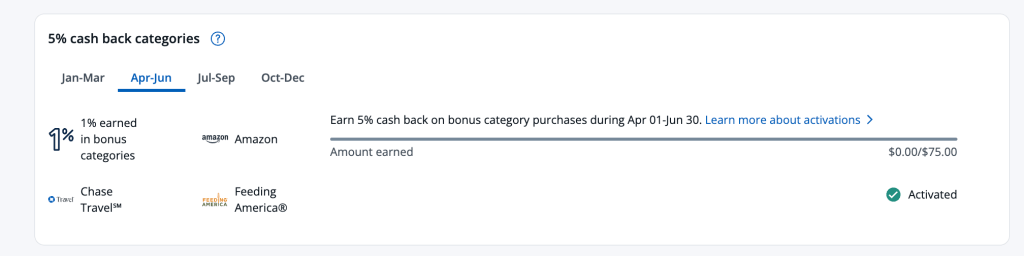
If your purchase codes as the right type of merchant, you may be eligible for bonus rewards without lifting a finger. Take the Freedom Flex’s rotating quarterly bonus categories: once activated, you earn an extra 4x points for a total of 5x on purchases in that category. Historically these have included gas, warehouse clubs like Costco, and Amazon. No extra steps required beyond activating the category at the start of each quarter.
Layer Three: Sign-Up Bonus Contribution
What most people miss is that a standard swipe gets significantly better when you’re actively working toward a sign-up bonus. If you’re in month two of spending toward a SUB, every dollar in that stack is also incrementally building toward a reward that could be worth thousands in travel. The purchase you were going to make anyway becomes dual-purpose.
Think of a SUB as extra points layered on top of each swipe. Consider the Capital One Venture X, which normally earns 2x miles on a standard online purchase. If you’re working toward the 75,000-mile SUB for $4,000 in spend, that works out to an effective 18.75x miles on top of your base 2x, for a blended total of roughly 20.75x on your spending during the SUB window. Capital One Miles carry a valuation of around 1.5 cents per point, which means that 20.75x translates to something close to a 30% return on spend. That’s before any other layer fires.
Layer Four: Limited-Time Promotions
These don’t come around often, but when they do, they’re among the most compelling stackable opportunities available.
Through December 31, 2026, eligible Chase cardholders earn an additional 10 points per dollar when using Paze at participating merchants, on up to $1,500 per month per card. Paze is a digital wallet at checkout, similar to PayPal, backed by several major U.S. banks including Chase.
Some purchases using this promotion can effectively reach 15x total points or higher, depending on which Chase card you use. The cap is $1,500 in Paze purchases per month, which translates to up to 15,000 bonus Chase Ultimate Rewards points monthly, earned entirely on top of your card’s normal rewards. The bonus also stacks on top of Chase Shopping Portal bonuses, so the right combination can push your earn rate well above 15x per dollar. Freedom Flex holders can push the ceiling even higher when a rotating quarterly bonus category overlaps with a Paze-eligible merchant.
Participating merchants are still limited but include some useful names: United Airlines, Newegg, Sephora, StubHub, and Dunkin’, among others. The list is only growing.
To activate Paze, set it up through the Chase mobile app. If your Chase cards don’t appear automatically when you create your Paze account, open the Chase mobile app (not the desktop site), select your eligible card, tap “Manage Account,” scroll down, and select “Digital Wallets.” Enroll from there.
Layer Five: Cashback Portals
Before checking out anywhere online, you should be asking one question: is there a portal rate for this merchant, and what is it?
A cashback portal like Rakuten or Rove Miles pays you a percentage of your purchase back in cash or points by tracking your click from their site to the retailer. The retailer pays the portal a referral commission; the portal shares a cut with you. It costs you nothing and requires one extra click before checkout.
The challenge is knowing which portal is paying the best rate for your specific merchant at this specific moment. Rates change constantly and vary significantly across portals. A retailer offering 3% back through Rakuten (payable as 3x Bilt or Amex points) might be offering 8% back through a different portal today.
This is where CashbackMonitor becomes essential. It’s a free comparison tool that aggregates rates across more than 42 cashback and rewards portals for over 15,000 stores, updated daily. Instead of checking portals one by one, you search a merchant once and see the current ranked rates side by side. The workflow is simple: before you check out anywhere online, pull up CashbackMonitor, search the retailer, and click through from whichever portal is leading. It takes 60 seconds and regularly surfaces rates you’d never find by browsing portals individually.

Interestingly, some banks even have their own cashback portals, which often offer the bank’s currency. In my experience, Capital One’s “Capital One Offers” (available only to cardholders) provides some very compelling rates.
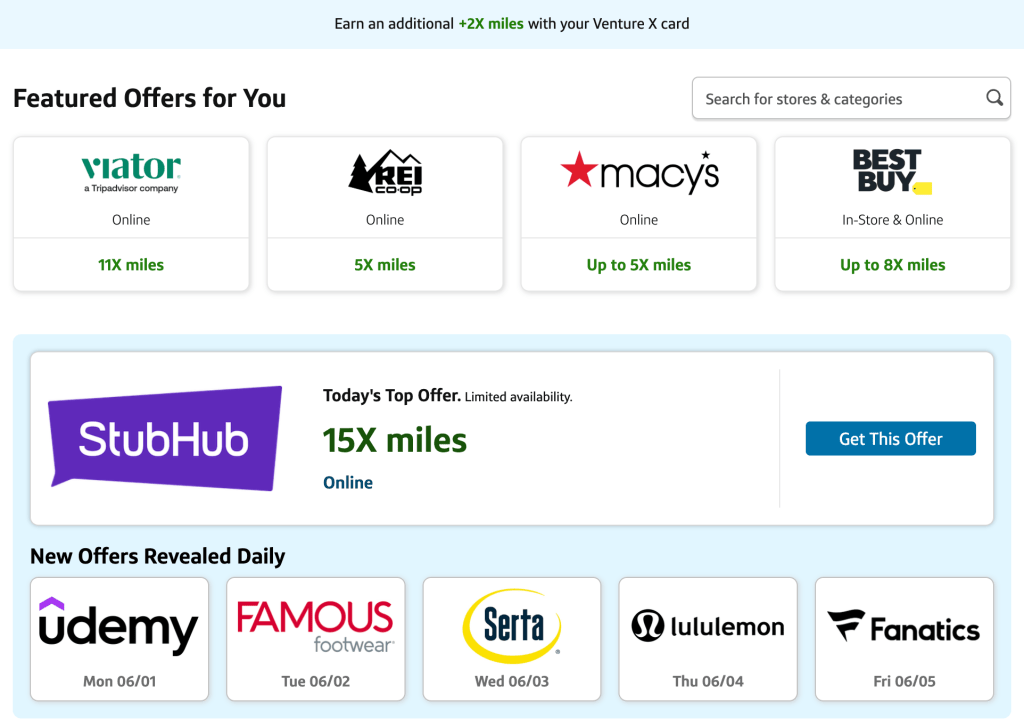
Portals are card-agnostic, meaning they layer on top of whatever card you’re using. Stack your portal click on top of your card rewards, your merchant offer, and your Paze bonus without any conflict.
Layer Six: Merchant Offers (e.g., Chase and Amex)
Some banks (notably Chase and Amex) offer card-linked promotions that appear directly in your online account or mobile app. You activate them in advance, then shop normally with your card. The discount or bonus fires automatically at the merchant: no coupon code, no separate checkout flow.
These are genuinely underused. Check your accounts and “clip” any relevant offers before making a meaningful purchase. Offers rotate constantly and can range from a small percentage back to flat statement credits of $10, $20, or more at specific retailers. Activating one takes about ten seconds and, if you were already planning to spend the money, directly reduces what that purchase costs you.

The critical point here: these are card-linked, not portal-dependent. They stack cleanly on top of cashback portals. Activate the offer and then still click through Rakuten or Rove Miles before checkout. Both count independently.
Layer Seven: Statement Credits
Several premium credit cards include built-in statement credits tied to specific merchants or spending categories. These are often overlooked because they feel like card benefits rather than a “reward,” but at the point of purchase, they function exactly the same way: they reduce the net cost of your transaction.
The Chase Sapphire Reserve, for example, includes a $300 annual travel credit that applies automatically to travel purchases. The Amex Platinum carries a range of credits spanning airlines, hotels, dining, and more. If you’re making a purchase that falls within one of these credit categories, you’re effectively getting a portion of that spend back as a dollar-for-dollar reduction before any other layer is calculated.
The key is knowing your card’s credits before you shop, not after. Map out which credits you have available and factor them in when deciding where to route a purchase. A $150 purchase at a credit-eligible merchant on a card with remaining annual credit is a very different transaction than the same $150 elsewhere.
Putting It Together: A Real Example
Say you’re buying a TV. You find that the specific model you’re eyeing is available on multiple merchants for the same price, including Newegg. Here’s what a full stack could look like on a single transaction:
First, check your Chase account for any active Newegg offers and clip. This would be card-linked and stacks with everything else.
Second, open CashbackMonitor, search Newegg, and identify the best active portal rate. Click through from that portal before you navigate to Newegg’s site.
Third, at checkout, select Paze as your payment method using your Chase Sapphire Preferred or Freedom card. That adds 10x bonus points on top of your card’s base earn rate, up to the $1,500 monthly cap.
Fourth, if you’re currently in a SUB spend window on that card, this purchase contributes toward it too.
One transaction. Up to four or five layers firing simultaneously. The points and discounts accumulate in the background without changing how or what you buy.
The Habit That Changes Everything
Stacking isn’t a trick you pull out for big purchases. It’s a pre-checkout habit. The routine is: check your Chase and Amex Offers, look up the portal rate on CashbackMonitor, use Paze if the merchant supports it, and pay with whichever card gives you the best return on that spend category.
Done consistently, this is the difference between earning 1x on your everyday spending and earning 5x, 10x, or more on the same dollars you were already going to spend.
The points don’t come from spending more. They come from spending smarter.